Chromium VI, or no Chromium VI, that is the question
Are you ready to transition to CFPA and LTS?
Hexavalent chromium (chromium VI) regulation is currently in a state of flux in Europe, creating uncertainty for the industry. But change is coming, and customers such as leading closures manufacturer, Pelliconi, are getting ready for it.
Pelliconi, founded in Bologna, Italy, in 1939, is a global leader in the production of metal and plastic closures for the food and beverage industry, with nine production plants across the world, plus international sales branches. The company produces over 32 billion caps annually, employs nearly 800 people, and generates around €280 million in revenue, driven by continuous investment and global expansion.
Chromium electroplating has been used industrially for around a hundred years. Initially applied for decorative and wear‑resistant purposes, its use has since expanded to a wide range of industries and applications over time. Dedicated chromium‑based surface treatments were later developed specifically for packaging needs, including the chromium‑based passivation of tinplate and, more recently, electrolytic chromium-coated steel. These packaging technologies have been in use for several decades.
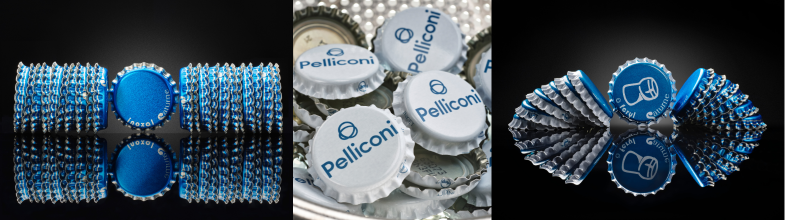
©Pelliconi
Chromium VI regulation: where things stand and what it means for the market
The regulatory framework governing the use of chromium VI in Europe is currently in a transition phase. Under the EU REACH regulation, chromium VI is today subject to an authorisation regime, which remains in force while a future restriction regime is being prepared. While the new framework is being refined, the European Commission has prolonged existing REACH authorisations, including those covering tinplate passivation and electrolytic chromium-coated steel (ECCS), until mid‑2030.
The European Chemicals Agency (ECHA) has issued a draft proposal that would ban all uses, except for a closed list of six specific-use categories. Tinplate passivation and ECCS fall under use Category 5, meaning these applications are currently envisaged to remain allowed under certain very specific conditions, albeit with strong environmental and occupational exposure controls.
Key parameters of the new legislation are not yet fixed. A decision from the European Commission is expected in the second half of 2027 or in 2028, with the restriction anticipated to replace the current authorisation regime before its expiry in mid‑2030.
ArcelorMittal’s approach: supporting customers through regulatory transition
In this evolving regulatory context, our intent is to support the packaging market through the transition with a broad and flexible product offering.
We aim in the short-term to maintain the availability of chromium VI based solutions - such as tinplate and ECCS - albeit with extremely stringent safety conditions. But alongside, we are already offering chromium‑free passivation alternatives (CFPA) and Low Tin steel (our own Chromium-free alternative to ECCS) products. This dual approach is designed to give customers continuity while enabling a progressive transition aligned with regulatory developments and market readiness.
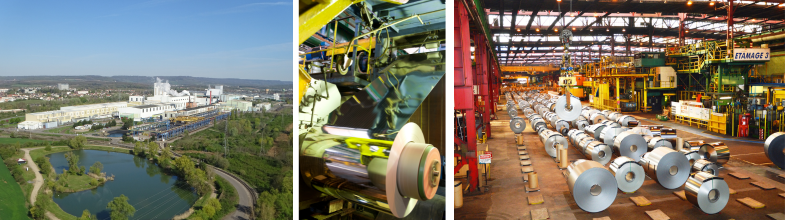
Left & right: ArcelorMittal plant in Florange, France / Middle: ArcelorMittal plant in Avilés, Spain
Our CFPA and LTS capacity is ready to support customers transitioning to safer, less impactful and non-toxic packaging alternatives
Our CFPA offering is a sustainable, tinplate passivation system for packaging steel that eliminates chromium VI. Using a coating based on a protective Ti/Zr oxide film embedded in a polymer matrix as defined in EN10202, it provides a safe, eco-friendly alternative for food and industrial packaging, with production capacity already prepared to meet customer demand. We have CFPA production lines up and running, with a combined capacity already at 50 per cent of our overall tinplate production.
Commenting on Pelliconi’s transition process to CFPA, Antonino Lo Piccolo adds: “The qualification is based on a structured internal validation process, designed to balance technical robustness with industrial scalability. Once laboratory results demonstrate performance equivalence versus standard chromium VI-based solutions, selected items are introduced through a controlled market deployment. The whole process benefits from an open, constructive and solution-oriented cooperation with the ArcelorMittal team.”
ArcelorMittal's LTS is a low tin coated steel with CFPA passivation, with characteristics specifically designed to address the markets currently served by ECCS. It is the only 100% chromium-free alternative to ECCS currently available for the packaging market.
Future CFPA line conversions will be driven by regulatory clarity and customer demand, ensuring that investments remain aligned with actual market requirements. This strategy reflects ArcelorMittal’s commitment to accompany the packaging value chain through regulatory change, while safeguarding supply reliability and technical performance.